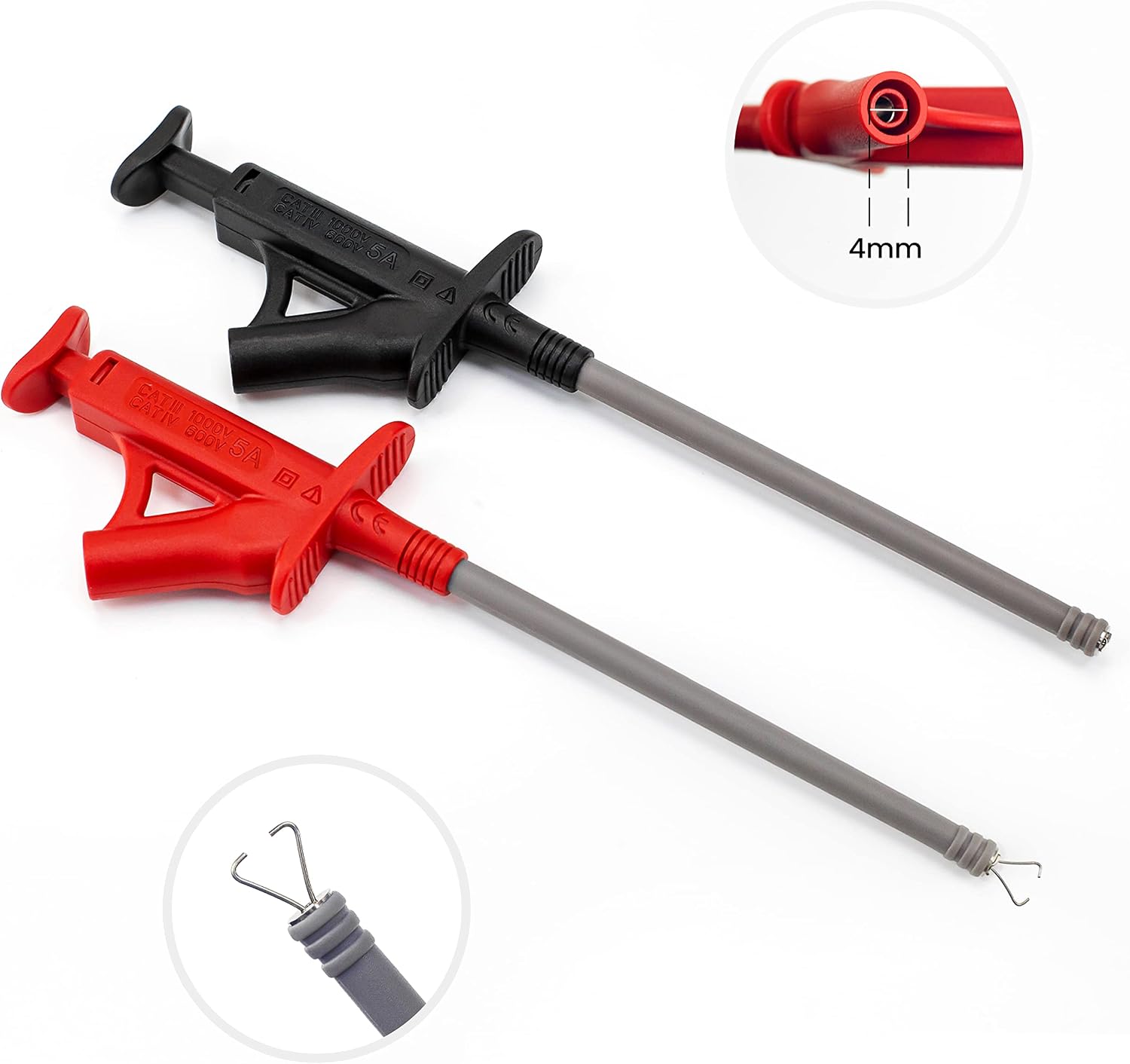
Your multimeter — the handheld device electricians use to measure voltage, current, and resistance — is a precision instrument. But it only gives you reliable readings if the probes and wires connecting it to the circuit are up to the job. Those wires and probes are called test leads, and they’re the most overlooked part of any electrician’s kit. Think of them like the tires on a performance car: the engine can be excellent, but worn-out tires will get you into trouble before the engine ever lets you down. This article is for anyone who owns a decent meter and suspects — or already knows — that the leads that came in the box aren’t doing it justice. We’ll break down what separates a safe, accurate lead set from a liability, compare budget upgrade kits to premium replacements, and give you a clear decision framework so you know exactly which direction makes sense for your work.
Why Your Test Leads Are Probably the Weak Link
Here’s a pattern that shows up consistently across aggregated owner reviews of mid-range and budget meters: the meter outperforms its leads. Owners of the KAIWEETS HT206D have noted that the meter itself competes well above its price point, but the included test leads undermine the experience. Reviewers of the KAIWEETS HT118E describe the meter performing dramatically better after a lead swap — same meter, better results, simply because of the wire in the operator’s hand.
This isn’t a brand-specific problem. It’s endemic to the category. Meter manufacturers compete hard on display resolution, True RMS capability (the ability to accurately measure non-sinusoidal waveforms, like those produced by variable-frequency drives or dimmers), and input protection. Test leads are frequently sourced at the lowest possible cost. Insulation is thinner, conductors are fewer-stranded and less flexible in cold weather, and the molded probe bodies may not meet the safety category rating printed on the meter itself.
That last point matters more than most people realize. CAT ratings — short for Category ratings defined by the IEC 61010-031:2022 standard, Safety Requirements for Hand-Held Probe Assemblies for Electrical Measurement and Test — describe how much transient voltage a probe assembly can survive without flashing over to the user. A transient is a sudden voltage spike, like the kind that occurs during a fault on a power distribution panel. A meter rated CAT III 600V paired with CAT II leads is a mismatch. The meter’s protection circuits expect leads that can handle the same energy levels. According to the Fluke Corporation Test Lead Safety and CAT Rating Reference Guide, using under-rated leads with a higher-rated meter negates the safety design of the instrument.
CAT Ratings by Work Environment — What You Actually Need
Before comparing kits, lock down the spec you’re shopping for. This is the non-negotiable frame.
| Work Environment | Minimum Lead Rating |
|---|---|
| Residential panel (120/240V service entrance) | CAT III 300V |
| Commercial/industrial panel (480V, motor control) | CAT III 600V |
| Utility or primary distribution (service entry points) | CAT IV 600V |
| Automotive / low-voltage DC circuits (under 50V) | CAT II acceptable |
NFPA 70E:2024, Standard for Electrical Safety in the Workplace, specifies that any work on energized parts at 50V or above in an industrial or commercial environment requires appropriately rated PPE and appropriately rated test equipment — and test leads are explicitly part of that equipment chain. UL 61010-031, Standard for Safety for Test and Measurement Equipment, Part 031: Safety Requirements for Hand-Held Probe Assemblies, validates that probe assemblies can withstand the impulse voltages specified for each category without breakdown.
The practical takeaway: if you’re doing residential panel work regularly, CAT III 300V is your floor. If you’re pulling permits for commercial work — 480V motor circuits, MCC buckets, three-phase panels — CAT III 600V is where you need to be. Don’t accept a CAT number without the voltage rating. They are not the same specification.
One important caution: owner feedback rarely reflects independent verification of CAT ratings using calibrated test equipment. If you’re specifying leads for a safety-critical commercial application, look for kits that reference UL or TÜV certification on the product listing, not just a CAT number printed on the insulation.
Upgrade Kit vs. Replacement Set: Two Different Decisions
These are not the same purchase, and conflating them leads to buyers getting the wrong thing.
A replacement set is a like-for-like swap: two leads, two probes, sized for your meter’s input jacks. You’re solving the durability and safety-rating problem without changing how you work. This is the right move if your current workflow covers it — you’re doing residential service calls, you measure voltage and continuity, and you want leads that won’t develop intermittent connections after 18 months of regular use. ECM Web’s electrical testing best practices coverage specifically calls out the importance of matching lead quality to meter quality for accurate low-resistance measurements, noting that conductor resistance in budget leads directly adds to resistance readings on motor windings and bonding conductors.
An upgrade kit is a different proposition. It’s a case or pouch containing multiple probe types — alligator clips (spring-loaded clamps for hands-free connections), hook probes, needle-tip probes for piercing insulation, back-probe pins for connector testing, and sometimes banana plug adapters for bench use. You’re not just replacing what broke; you’re expanding what your meter can do.
Comparing the Options: Three Tiers for Three Use Patterns
H3: Budget Entry — Basic Replacement Sets for Residential Work
For electricians doing residential service calls — outlet testing, panel voltage checks, continuity on breakers and receptacles — a quality replacement set at the CAT III 300V rating resolves the stock-lead problem without overbuying. The Fluke TL75 Hard Point Test Lead Set is the benchmark reference at this level: silicone-jacketed cable for cold-weather flexibility, CAT III 600V rated (which exceeds residential minimums), and probe tips that fit standard 4mm banana jacks used by Fluke, Klein, Extech, KAIWEETS, and most other general-purpose meters. Pomona Electronics precision-tip leads occupy similar territory for bench and low-voltage applications. At this tier, you’re paying for documented safety ratings and conductor integrity, not accessories. The tip-to-tip resistance of a quality replacement set should read under 0.5 ohms — any more than that, and the leads are adding error to every low-resistance measurement you take.
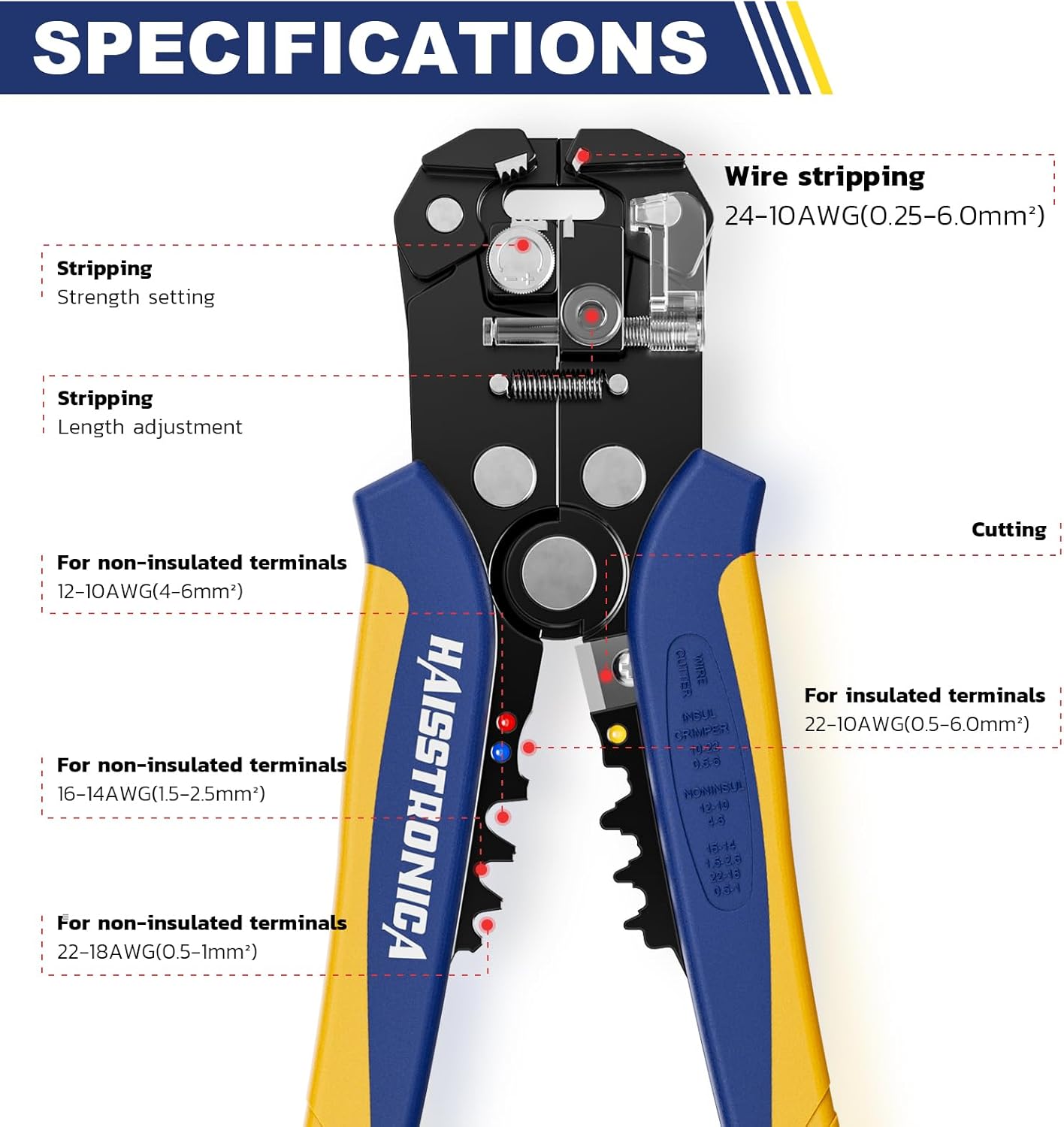
haisstronica
$13.99
In stock on Amazon
Check price on AmazonH3: Mid-Tier — Upgrade Kits for Multi-Discipline Diagnostics
The KAIWEETS 23-piece upgrade kit targets the technician who crosses disciplines — residential electrical, HVAC, automotive, low-voltage controls. The variety of adapters is the draw: hook probes, alligator clips, and back-probe pins cover the majority of connector scenarios where you need hands-free or non-invasive contact. Owners consistently praise the hook probes and clips for automotive fault-chasing, describing it as genuinely useful for hunting intermittent faults through wiring harnesses. The organization of the kit’s carry case is called out in owner feedback as practical rather than just marketing.
The durability picture is honest: documented owner reports include internal wire failure after two weeks of use. The company addressed the issue promptly, which speaks to customer service, but the failure mode itself matters. This kit is well-suited to occasional-to-regular use — residential service calls a few times a week, weekend automotive diagnostics, apprentice kit builds. For daily hard-use on a commercial or industrial site — eight hours a day in concrete dust, tool bags, jacket pockets in the rain — the mid-tier upgrade kit is not the optimal specification. Buy it for the right use pattern and it performs well. Buy it expecting commercial-grade durability and it will disappoint.
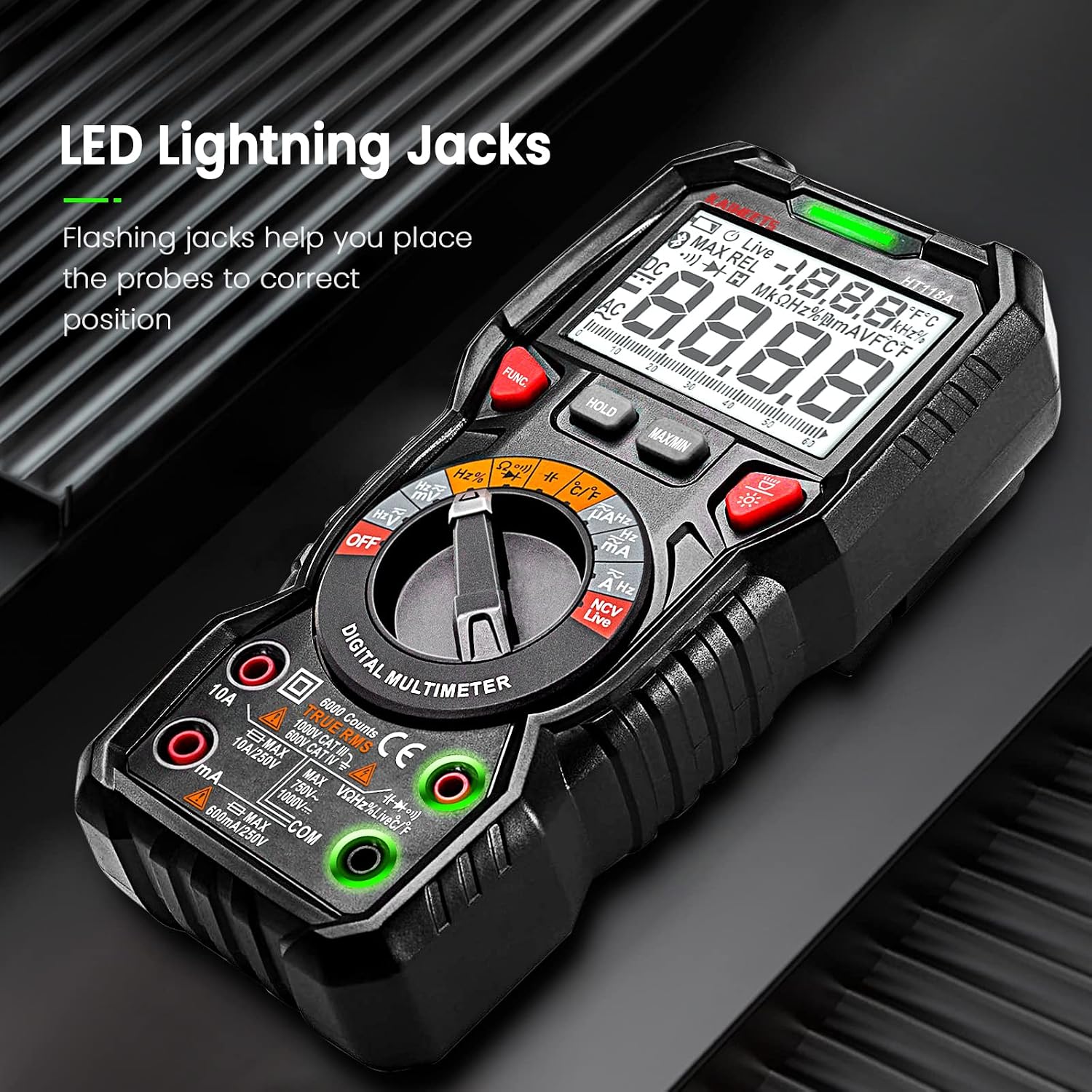
KAIWEETS
$37.99
In stock on Amazon
Check price on AmazonH3: Premium Depth — High-Piece-Count Kits for Commercial and Multi-Trade Work
The AUTOOL 68-piece kit addresses the contractor who works across residential and light commercial environments with multiple meter brands and connector types. The breadth of 68 pieces means adapters for situations not yet encountered — which is either a genuine depth advantage or organizational noise, depending on how systematically you work. Owner feedback on the AUTOOL kit trends strongly positive, with multiple independent reviews describing it as worth the price without qualification. The standout features cited are the piercing probes and the alligator clips, with owners specifically noting the clips as higher-rated and better-built than typical budget kit clips.
For a service contractor running a route that includes residential panels, light commercial 480V equipment, and automotive or equipment diagnostics, the AUTOOL kit’s depth is a legitimate advantage over a basic replacement set or a smaller upgrade kit. The piercing probes alone — detailed further in the FAQ below — represent a diagnostic capability that no basic replacement set provides. If you’re specifying for a safety-critical commercial application, verify that the kit’s listed CAT rating includes the voltage number and look for third-party certification documentation rather than relying on printed markings alone.
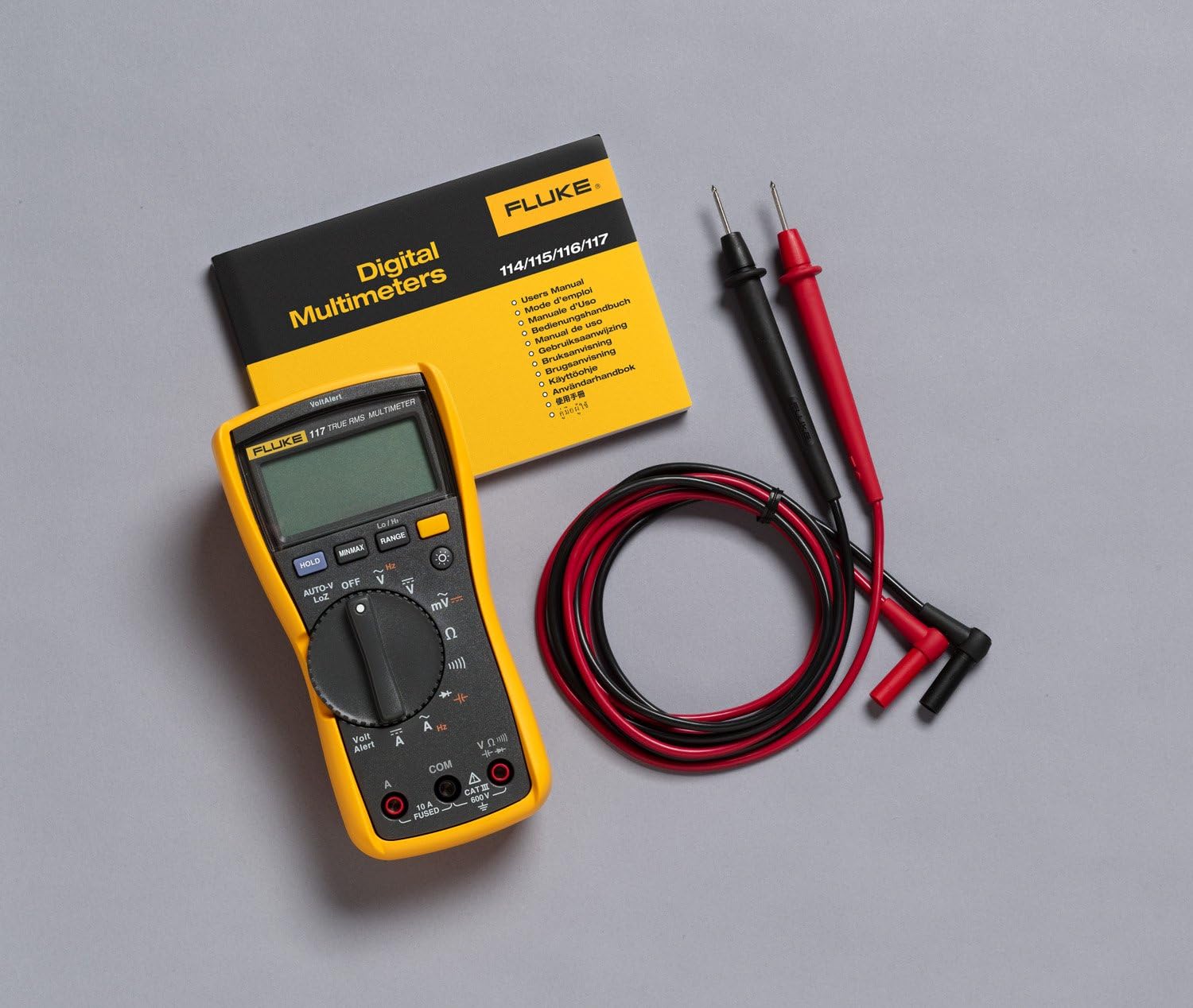
Fluke
$252.99
In stock on Amazon
Check price on AmazonWill Aftermarket Leads Fit Your Meter?
The connector standard used by the overwhelming majority of multimeters — Fluke, Klein, Extech, Greenlee, KAIWEETS, Hioki, and most others — is the 4mm banana plug. It is an industry-standard size, and virtually all aftermarket lead sets and upgrade kits are built around it.
There are two exceptions worth knowing: some specialty meters use shrouded or locking banana plugs that require matched leads, and certain Fluke proprietary connector designs appear on specialty instruments outside the standard handheld meter line. For the vast majority of general-purpose meters in the $30–$500 range, standard 4mm aftermarket leads fit without modification. Verify before purchasing if you own a specialty or legacy instrument.
How to Tell If Your Current Leads Are Creating Measurement Errors
Continuity test on the leads themselves. Connect your meter to its own leads tip-to-tip and check resistance. A good lead set should read under 0.5 ohms total. If you’re seeing 1–2 ohms or the reading fluctuates when you flex the cable near the probe tip or the banana plug, you have a conductor integrity problem. Any resistance reading you take on low-resistance targets — motor windings, fuse checks, bonding conductors — will be off by that exact amount.
Visual inspection at the stress points. The two failure zones are: the junction where the cable enters the probe body, and the junction where the cable enters the banana plug. These are where flexing concentrates. Cracked insulation, visible conductor strands, or a plug that moves independently of the cable are go/no-go failures.
Intermittent readings on known-stable circuits. If a circuit you know is live reads intermittently, or a continuity test flickers, and you’ve ruled out the connection at the test point — the leads are the next suspect.
Frequently Asked Questions
Will aftermarket leads fit any multimeter brand, including Fluke and Klein? Yes, with the exceptions noted above. Standard 4mm banana plugs are the industry norm across Fluke, Klein, Extech, KAIWEETS, Hioki, and most other general-purpose meters. Verify before purchasing if you own a specialty or legacy instrument.
What CAT rating should test leads have for residential vs. commercial panel work? CAT III 300V minimum for residential panels. CAT III 600V for commercial and industrial panels operating at 480V. Don’t work from a CAT number alone — the voltage rating is part of the specification. Per IEC 61010-031:2022, Safety Requirements for Hand-Held Probe Assemblies for Electrical Measurement and Test, both the category and the rated voltage must be appropriate for the installation.
Is the KAIWEETS 23-piece kit durable enough for daily professional use or just occasional use? Based on aggregated owner feedback, it’s well-suited for occasional-to-regular use — residential service calls, automotive diagnostics, hobbyist and prosumer work. Documented internal wire failure after two weeks of use is a data point that indicates it’s not the optimal choice for daily hard-use on commercial or industrial sites. If daily professional durability is the requirement, a purpose-built replacement set with documented CAT III 600V rating is a safer specification.
What is a wire-piercing probe and when do electricians actually need one? A wire-piercing probe has a needle-sharp tip designed to puncture through the insulation of a wire and make contact with the conductor inside without cutting or stripping the wire. Electricians use them when they need to measure voltage or continuity on a circuit where the connector is inaccessible or where stripping insulation isn’t practical: automotive wiring harnesses, alarm and low-voltage control wiring in finished walls, or HVAC control circuits where the terminal block is buried. The AUTOOL 68-piece kit’s piercing probes are consistently called out by owners as a differentiating feature of that kit.
How do I know if my current test leads are creating measurement errors? Run the tip-to-tip resistance check described above. Any reading over 0.5 ohms or any fluctuation under flex is a flag. Visually inspect the cable-to-probe and cable-to-plug junctions for cracking or movement. Intermittent readings on a stable circuit — after you’ve ruled out the test point connection — are a strong indicator of lead integrity failure.
The Decision Rule
If your meter cost more than $100 and you’re doing panel work beyond simple outlet testing: replace the stock leads before the next job, not after the next near-miss. A CAT III 600V replacement set costs less than an hour of your labor rate and removes the most common variable between “meter said it was safe” and “it actually was.”
If you do automotive or multi-discipline diagnostics alongside electrical work: the AUTOOL 68-piece kit’s breadth and owner-praised piercing probes and alligator clips make the upgrade kit the right call — you’re not just replacing leads, you’re adding capability you’ll use.
If you’re an apprentice or residential-focused tech doing service calls a few times a week: the KAIWEETS 23-piece kit covers the variety question at an accessible price point. Buy it knowing it’s the right tool for that use pattern, not a substitute for a commercial-grade set on an industrial site.
The leads in your hand are the last link between your meter and the truth about a circuit. That’s worth spending twenty minutes getting right.