A multimeter is the tool that tells you what electricity is actually doing inside a wire, a battery, or a circuit — how much voltage (electrical pressure) is present, how much current (the flow of electrons, measured in amps) is moving through it, and how much resistance (opposition to that flow, measured in ohms) the circuit has. If you’ve been using a $15 store-brand meter and found yourself second-guessing a reading — wondering whether that low voltage reading on your car battery is real or just meter drift — you already know why people end up in the Fluke aisle. This article is for the person who has decided to buy a real meter and now faces the next question: which Fluke entry model actually fits their work? We’re comparing the Fluke 15B+, the Fluke 17B+, and the Fluke 115 — three meters that live in similar price territory but are aimed at meaningfully different use cases. By the end, you’ll have a clear decision rule, not just a feature list.
Why These Three? Understanding the Tier Before the Tradeoffs
The 15B+, 17B+, and 115 all occupy what Fluke markets as its entry-to-mid-range handheld segment — priced well below the Fluke 87V and the Fluke 117, but far removed from the unbranded meters that populate discount-tool bins. What they share matters more than what separates them: all three carry Fluke’s baseline build quality, a CAT III 600V safety rating, and the brand’s reputation for measurement accuracy.
The CAT III 600V rating deserves a plain-language explanation. CAT ratings — defined under IEC 61010-1, the international standard governing safety requirements for electrical measuring instruments — describe the electrical environment a meter is designed to survive. CAT III covers the distribution-level wiring found in a building’s main panel and branch circuit wiring. A CAT III 600V rating means these meters are engineered for the electrical environments most DIYers and residential tradespeople actually encounter, not just low-voltage hobby circuits.
The consistent pattern among buyers stepping up to Fluke is that they aren’t replacing a broken meter — they’re replacing a meter they didn’t trust. That’s the actual value proposition of entering the Fluke ecosystem at any level, and it is the baseline all three models share.
Where they diverge is in feature sets, intended environments, and the small but meaningful quality-of-life details that separate a meter you reach for instinctively from one you merely tolerate.
Head-to-Head: Three Meters, Three Use Cases
The Fluke 15B+: The Honest Automotive and General DIY Workhorse
The 15B+ is the stripped-down entry point, and “stripped down” here means stripped of features you may not need — not stripped of quality. According to the Fluke Corporation Model 15B+ Specification Sheet, DC voltage accuracy is rated at ±0.5%, which is tighter than most budget meters and more than sufficient for the two jobs it handles best: automotive electrical diagnostics and general home troubleshooting.
The automotive use case is where the 15B+ has carved out a genuine niche. A particularly common application is parasitic drain testing — the process of measuring a small current draw (often in milliamps) that slowly kills a car battery overnight when the vehicle is parked. The Fluke Corporation Model 15B+ Specification Sheet confirms that the meter includes a milliamp measurement range suited to exactly this work.
What the 15B+ does not do: it lacks True-RMS measurement. True-RMS (Root Mean Square) is the measurement method that delivers an accurate reading of AC voltage or current when the waveform is not a clean sine wave — which is increasingly common in homes and shops equipped with variable-speed motor drives, LED dimmers, and inverter-based equipment. For straight automotive DC work or basic household outlet testing, this limitation rarely matters. For anything involving modern electronics or non-linear loads, it matters considerably. Fluke Corporation’s application note titled True-RMS vs. Average-Responding Meters explains this directly: average-responding meters assume a clean sine wave and introduce real measurement error when the waveform is distorted.
If your work is under the hood or around the house on conventional circuits, the 15B+ is honest value. If your work involves panels with variable-frequency drives or modern LED lighting controls, it is the wrong tool.
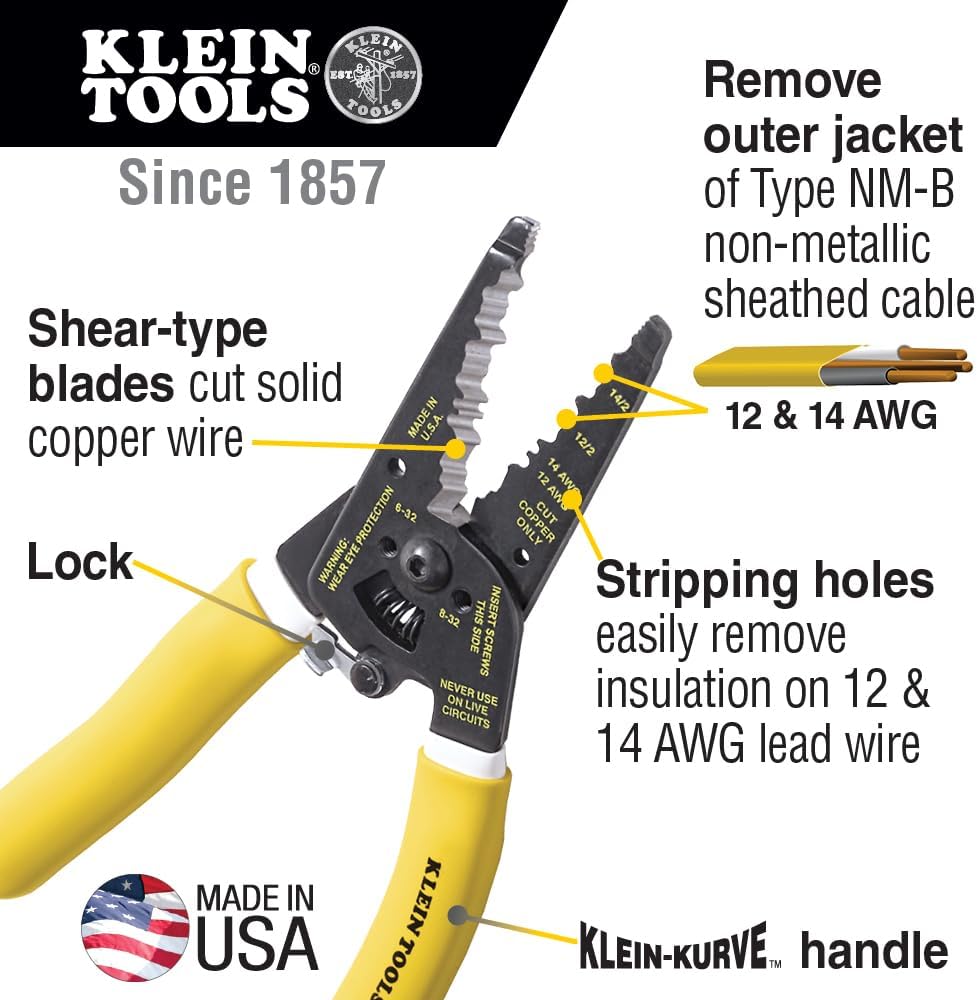
Klein
$29.97
In stock on Amazon
Check price on AmazonThe Fluke 17B+: The Step-Up That Earns Its Price
The 17B+ adds two things the 15B+ doesn’t have: True-RMS AC measurement and a temperature input via Type-K thermocouple probe. Those two additions substantially widen the meter’s useful range without moving it into a different price class.
The True-RMS capability is the more broadly important of the two additions. Per the Fluke Corporation Model 17B+ Specification Sheet, the meter is rated for True-RMS AC voltage and AC current measurements — meaning it delivers accurate readings on distorted waveforms, not just clean utility sine waves. For anyone working around HVAC equipment, variable-frequency drives, or modern LED-heavy residential circuits, that accuracy difference is real and practical, not theoretical.
The temperature function appeals to a different kind of user. Electronics hobbyists, audio restoration technicians, and bench-focused engineers working on components cite the integrated Type-K thermocouple input as a meaningful convenience: having temperature measurement built into the primary meter reduces bench clutter during soldering work and component evaluation. The 17B+ earns its price not because it does exotic things, but because it handles a wider range of ordinary things accurately.
Key specification comparison — 15B+ vs. 17B+:
| Feature | Fluke 15B+ | Fluke 17B+ |
|---|---|---|
| True-RMS AC | No | Yes |
| Temperature (Type-K) | No | Yes |
| DC Voltage Accuracy | ±0.5% | ±0.5% |
| CAT Rating | CAT III 600V | CAT III 600V |
Sources: Fluke Corporation Model 15B+ Specification Sheet; Fluke Corporation Model 17B+ Specification Sheet.
The accuracy floor is identical across shared functions. The 17B+ costs more because of what it measures accurately, not because the underlying instrument is more precise on the features they share.
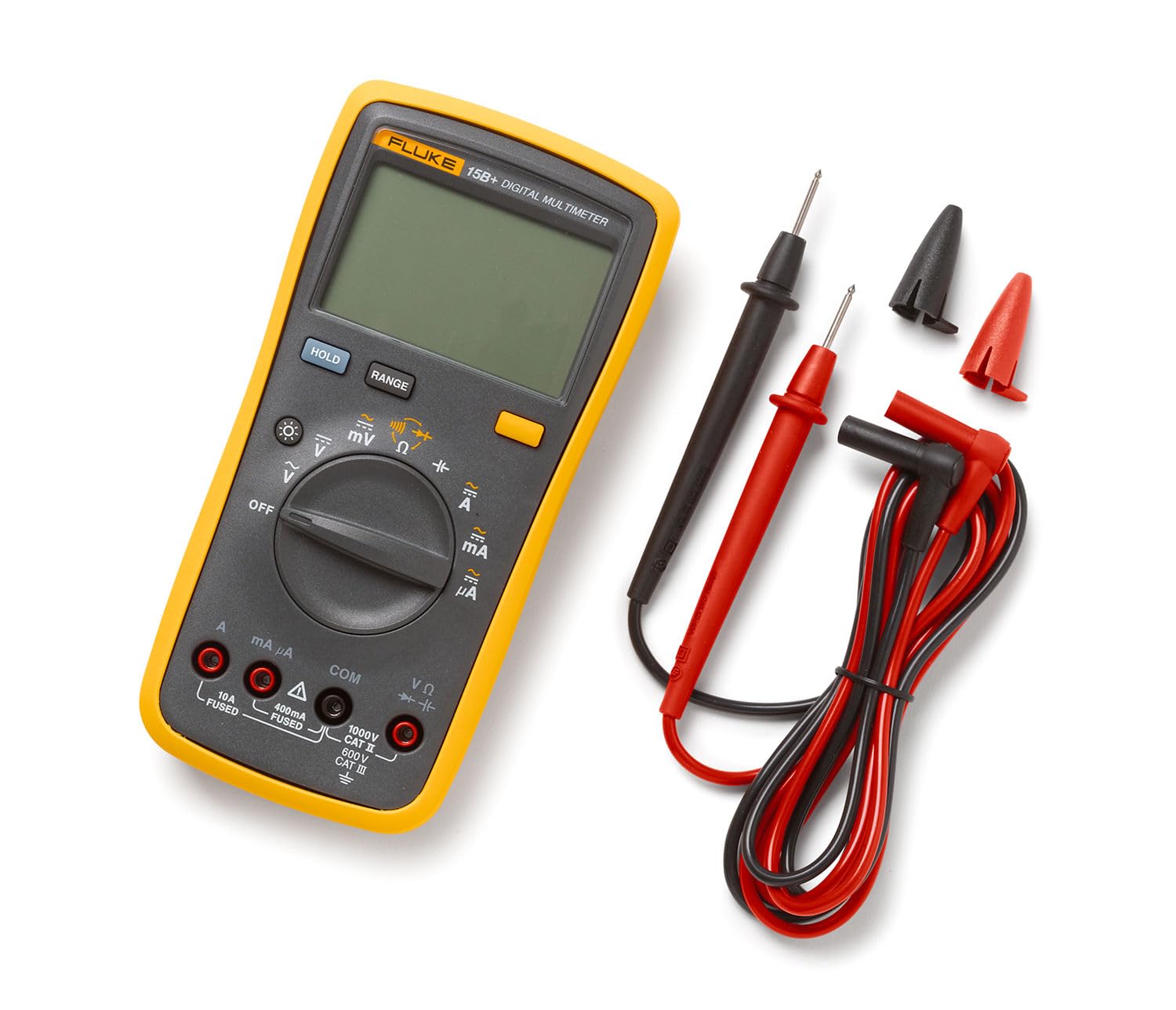
Fluke
$116.14
In stock on Amazon
Check price on AmazonThe Fluke 115: Built for the Trades, Not the Bench
The 115 occupies an interesting position: it’s priced similarly to the 17B+ in most markets, but it is a fundamentally different instrument aimed at a different user. Where the 17B+ is a generalist with extended reach, the 115 is a trades-focused meter — designed for residential electricians, HVAC technicians, and facilities maintenance personnel who need a reliable everyday instrument and care deeply about in-panel usability.
The 115 is True-RMS capable, which EC&M (Electrical Construction & Maintenance), in its feature article How to Choose a Digital Multimeter, identifies as a baseline requirement for trade-level electrical work involving modern loads and non-linear waveforms.
The 115 also adds low-input impedance mode — often labeled LoZ — which suppresses ghost voltage readings. Ghost voltage, also called phantom voltage, is a false AC reading that appears on deenergized conductors running near energized ones due to capacitive coupling. It is a persistent nuisance in residential work and can lead a technician to treat a dead circuit as live or a live circuit as dead. The LoZ mode drains ghost voltage by presenting a low-resistance path, giving a confident reading of whether a circuit is genuinely energized. Test Equipment Depot’s product documentation for the Fluke 115 specifically identifies the LoZ mode as a primary reason residential electricians prefer this model over similarly priced alternatives.
What the 115 does not do: it does not measure capacitance — the ability of a component to store charge, measured in farads, which is relevant for testing run and start capacitors in HVAC compressors and motor circuits. If capacitor testing is part of your regular work, the 115 is not the right stopping point; the Fluke 117 adds that capability and remains accessible in price for most trade budgets. This is a real limitation for HVAC technicians in particular, and it is worth knowing before purchase.
The 115’s build details also matter for trade use. Test Equipment Depot’s buyer documentation for the Fluke 115 notes the quality of the lead retention system — detented (spring-loaded, locking) lead shrouds that prevent accidental disconnection during use. This is the kind of detail that sounds minor until a lead drops from an energized terminal while you’re working alone in a panel.
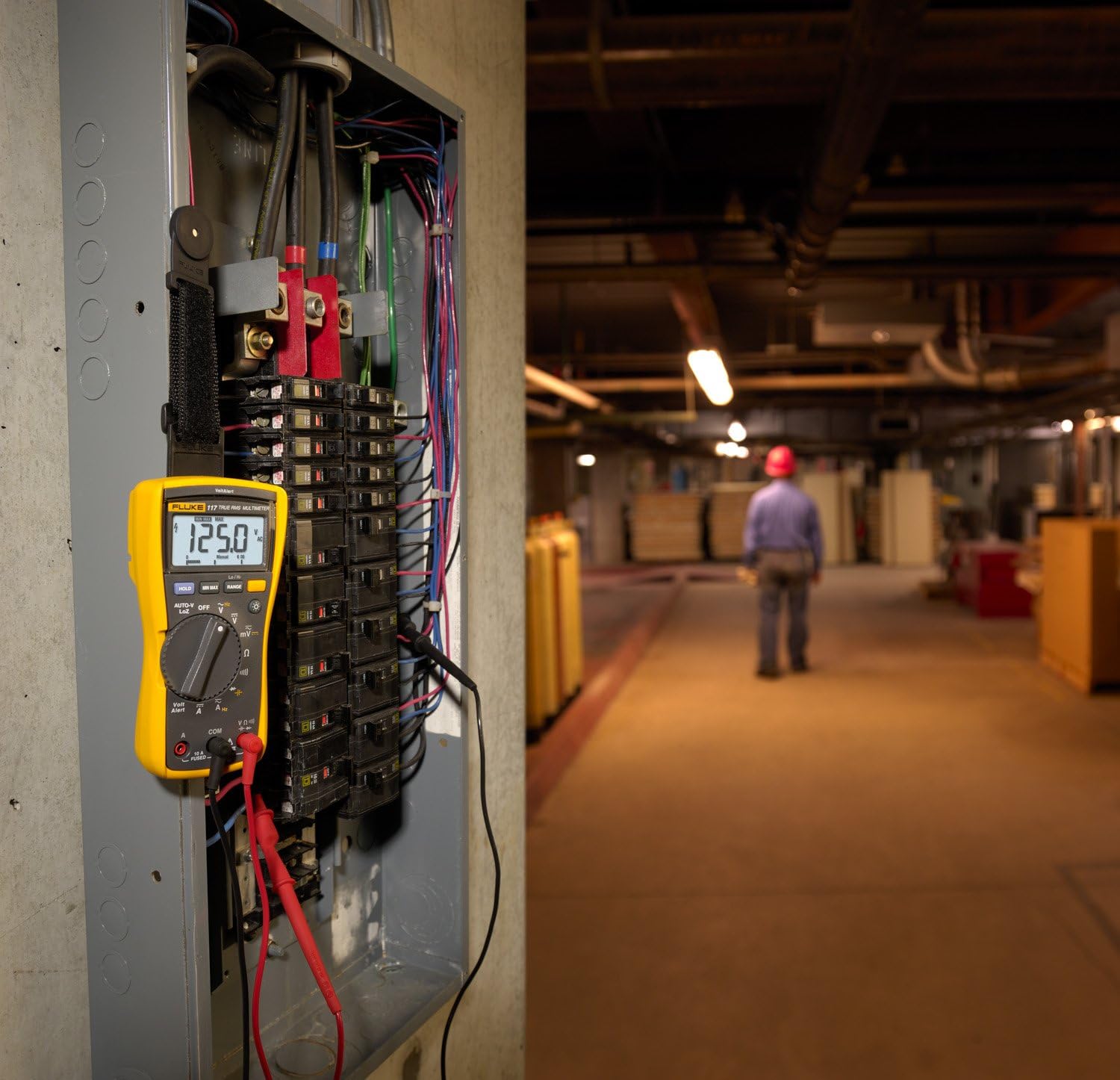
Fluke
$391.56
In stock on Amazon
Check price on AmazonFull Three-Way Comparison at a Glance
| Feature | Fluke 15B+ | Fluke 17B+ | Fluke 115 |
|---|---|---|---|
| True-RMS AC | No | Yes | Yes |
| Temperature | No | Yes (Type-K) | No |
| LoZ Ghost Voltage Mode | No | No | Yes |
| Capacitance | No | No | No |
| DC Voltage Accuracy | ±0.5% | ±0.5% | ±0.5% |
| CAT Rating | CAT III 600V | CAT III 600V | CAT III 600V |
| Primary Use Case | Automotive / DIY | Electronics / bench / HVAC | Residential trades |
Sources: Fluke Corporation Model 15B+, 17B+, and 115 Specification Sheets; Test Equipment Depot Fluke 115 product documentation.
The Counterfeit Problem: Why “Fluke” on the Label Isn’t Enough
Any comparison of Fluke entry meters in 2026 has to address this directly. Counterfeit and underspecified Fluke meters remain a documented problem on third-party marketplace channels. The instruments look similar, carry Fluke branding, and are priced to appear like a deal — and some fail the CAT safety ratings defined under IEC 61010-1, the international standard governing safety requirements for electrical measuring instruments. A meter that claims CAT III performance but fails at far lower energy levels is not a bargain; it is a hazard.
The practical guidance is straightforward: purchase from authorized distributors. Fluke Corporation maintains an authorized distributor list on its website (fluke.com). Test Equipment Depot is a well-documented authorized Fluke channel. A modest discount on a gray-market meter is not worth a CAT III-labeled instrument that performs below CAT I conditions.
Frequently Asked Questions
Is the Fluke 15B+ accurate enough for automotive parasitic drain testing? Yes. The Fluke Corporation Model 15B+ Specification Sheet confirms a milliamp measurement range and ±0.5% DC voltage accuracy — both sufficient for parasitic drain work. It is arguably the 15B+‘s strongest use case. Confirm you’re purchasing from an authorized distributor to ensure you receive a genuine instrument.
What does the Fluke 17B+ add over the 15B+ that justifies the price difference? Two things: True-RMS AC measurement and Type-K temperature input. The Fluke Corporation application note True-RMS vs. Average-Responding Meters makes clear why this distinction is meaningful for any work involving modern switching loads, LED dimmers, or variable-speed equipment. If your work is strictly automotive DC, the 15B+ is sufficient and the 17B+‘s additions provide no benefit for that use case.
Does the Fluke 115 measure capacitance? No. The Fluke Corporation Model 115 Specification Sheet does not include capacitance measurement as a listed function. For capacitor testing — common in HVAC compressor diagnosis and motor circuit troubleshooting — the Fluke 117 or higher is the appropriate choice. The 115’s primary advantages are True-RMS AC measurement and LoZ ghost-voltage suppression for residential electrical work.
How long do Fluke batteries last in daily field use? The Fluke Corporation Model 115 Specification Sheet cites 400 or more hours of battery life under standard operating conditions. The auto-power-off feature, standard across the 15B+, 17B+, and 115, extends real-world battery life significantly for users who don’t always remember to power the meter down between jobs.
What if I need both a multimeter and a clamp meter? Fluke periodically offers bundle kits pairing the 117 multimeter with the 323 clamp meter through authorized distributors. If both instruments are on your list, check current authorized-distributor pricing for bundle availability — the combination approach has historically offered better per-unit value than purchasing each instrument separately.
The Decision Rule
Here’s the plain version:
- If your primary use is automotive diagnostics or basic household troubleshooting and you don’t need temperature measurement or True-RMS on distorted waveforms: the Fluke 15B+ is the right-sized, honest choice.
Klein
$29.97
In stock on Amazon
Check price on Amazon- If you work across automotive, audio and electronics bench work, or any environment with modern variable-speed or switching loads where waveform distortion is a factor: the Fluke 17B+ is worth the step up.
Fluke
$116.14
In stock on Amazon
Check price on Amazon- If you’re a residential electrician, HVAC technician, or facilities maintenance technician who needs a daily-carry trades meter with ghost-voltage suppression and True-RMS as baseline requirements: the Fluke 115 is built for you — just know it stops short on capacitance measurement.
Fluke
$391.56
In stock on Amazon
Check price on Amazon- If capacitance testing or non-contact voltage detection is on your requirements list, the 115 points you to the Fluke 117, which adds both capabilities and remains accessible in price for most trade budgets.
The right meter isn’t the one with the longest feature list. It’s the one you reach for without thinking twice, because you already know it will tell you the truth.