Electrical Test Kits Compared: From $30 Homeowner Bundles to Professional Multi-Tool Sets
You move into a new house, flip on a light switch, and nothing happens. The breaker panel is a mystery — no labels, a previous owner’s chicken-scratch, or worse, labels that don’t match the circuits. You need to figure out which breaker controls which room, whether a dead outlet is actually dead or just tripped, and whether the wiring is doing what it’s supposed to do. That’s the moment a lot of people reach for their first electrical test kit — a bundled package of two to four measurement tools sold together — that typically includes a multimeter (a device that measures voltage, current, and resistance), a non-contact voltage tester (a pen-shaped tool that beeps or lights up near live wires without touching them), and sometimes a receptacle tester (a plug-in device that checks whether an outlet is wired correctly). This article compares the most popular bundles on the market in 2026, from $30 homeowner sets to $150-plus professional clamp-meter kits, so you can match the right tool set to where you actually are in your electrical career — or your home improvement project.
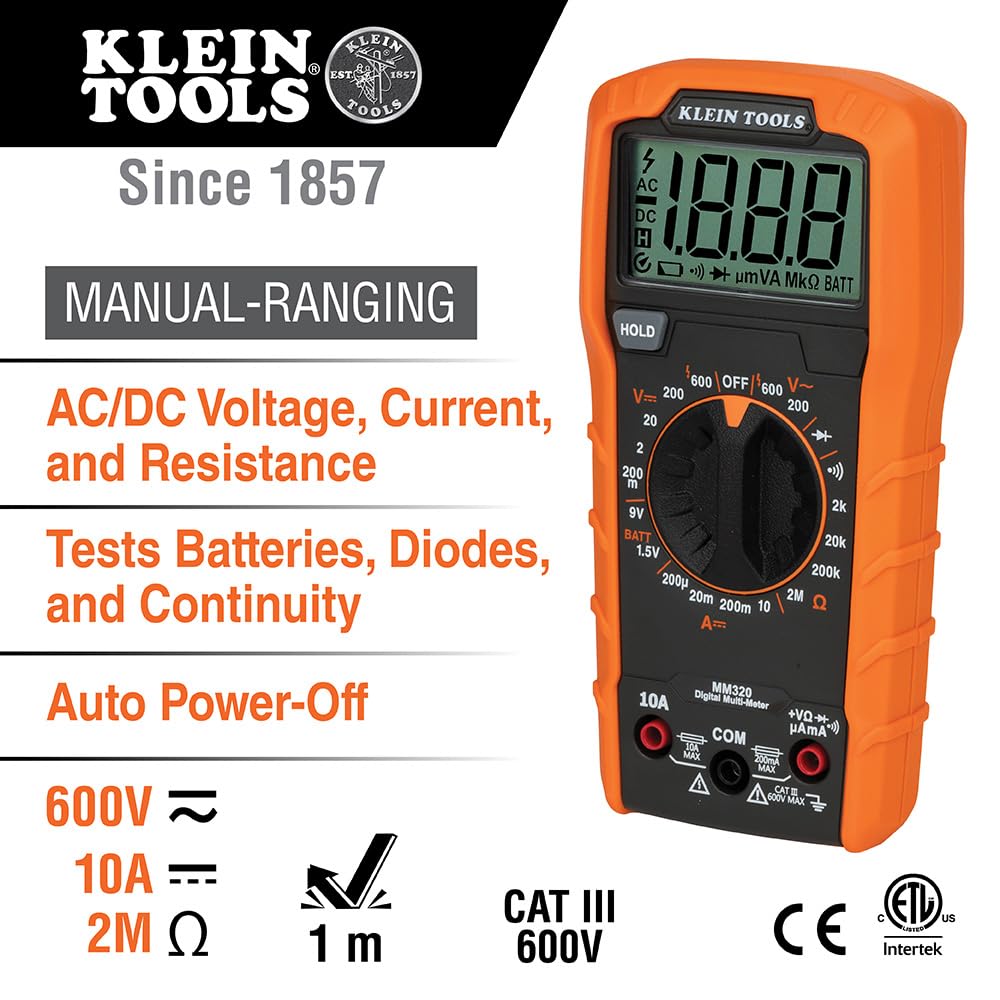
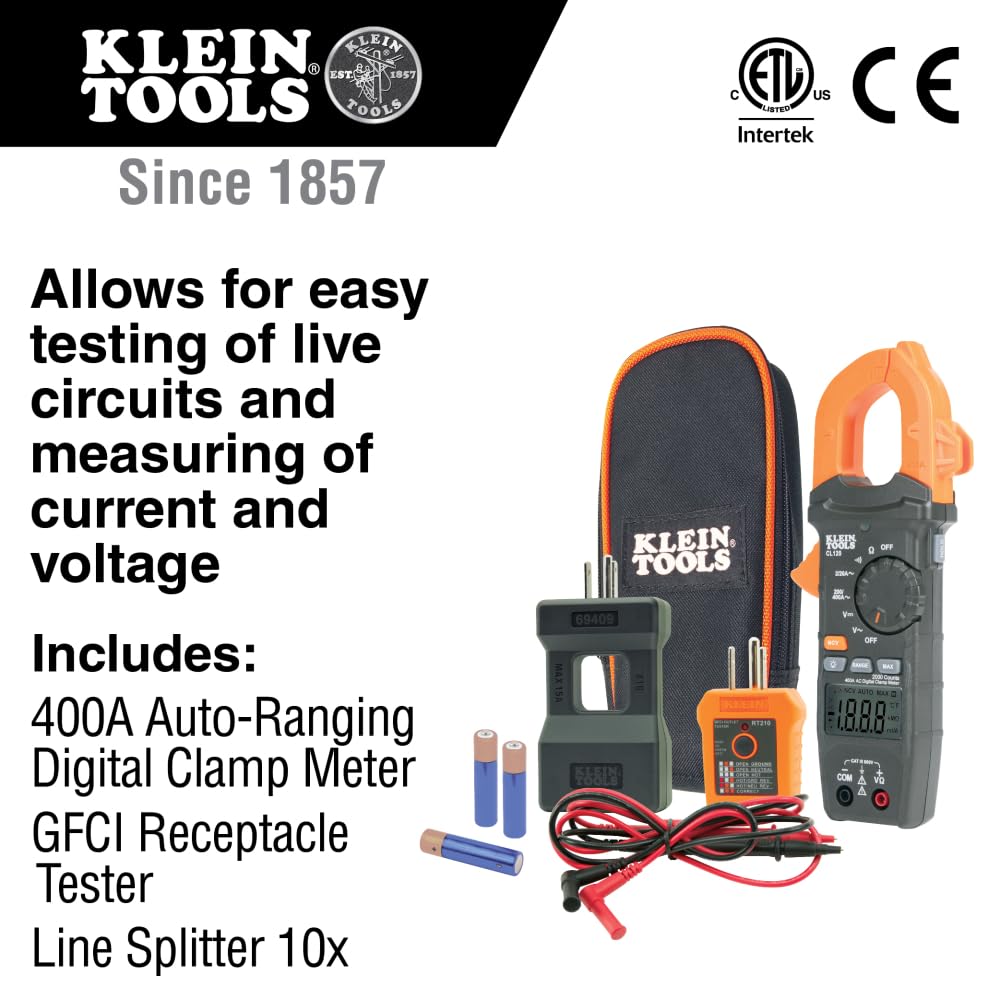
| EDITOR'S PICKKlein Tools CL120KIT Clamp Mete… | Mid-tierKlein Tools MM320KIT Digital Mu… | Budget pickKlein Tools 69149P Electrical T… | |
|---|---|---|---|
| Clamp meter | ✓ | ✗ | ✗ |
| Max current | 400 A | — | — |
| NCV tester | — | ✓ | ✓ |
| Carrying case | Pouch | ✓ | — |
| Included batteries | 3×AAA | ✓ | ✓ |
| Price | $74.97 | $54.99 | $39.99 |
| See on Amazon → | See on Amazon → | See on Amazon → |
Why People Actually Buy Kits (And What They Discover They’re Missing)
Let’s be honest about the purchase trigger. Reviewers of the Klein Tools 80101 four-piece kit repeatedly report the same scenario: they bought it because a previous homeowner left the breaker panel unlabeled. That’s not an abstract use case — it’s the single most relatable electrical frustration a homeowner faces. The 80101 bundles a basic multimeter, a non-contact voltage tester, an outlet tester, and a GFCI (ground-fault circuit interrupter) outlet tester. For that one job — tracing circuits and confirming outlets — it covers every step.
But here’s the tradeoff you should know up front: the 80101’s multimeter is an average-responding design, not True RMS. For straight 120V residential circuits running pure sine-wave power, that’s fine — the math works out. The moment you’re measuring output from a variable-frequency drive (VFD), a dimmer switch, or a solar inverter, average-responding meters read low, sometimes by 10–15%. Test Equipment Depot’s published explainer, Understanding True RMS vs. Average-Responding Meters (testequipmentdepot.com), explains that non-True RMS meters are calibrated for clean sinusoidal waveforms; distorted waveforms throw the reading off. For a homeowner labeling breakers, that doesn’t matter. For an apprentice who starts running circuits with motor loads, it will matter.
The Klein Tools 69149P two-piece kit — a multimeter plus a non-contact voltage tester — draws an interesting crowd. Buyers frequently mention using it for automotive diagnostics: testing battery voltage, checking fuse continuity, tracing a parasitic draw. Klein markets it for home electrical, but the audience is clearly broader. The kit’s ceiling is honest: no capacitance measurement, no frequency mode, no MIN/MAX recording. It’s a capable starter kit with a defined stopping point.
The Three Kit Tiers: A Structured Comparison
The kits covered here fall naturally into three tiers based on price, capability, and the type of user each one actually serves. Understanding where the tier boundaries sit — and why — helps you avoid buying twice.
Budget Tier: KAIWEETS KIT01
Klein
$39.99
In stock on Amazon
Check price on AmazonThe KAIWEETS KIT01 sits in the $30–$45 range and includes a multimeter, a non-contact voltage tester, and a carrying case. A commonly reported use case illustrates what it does well: a homeowner’s electric dryer stopped heating. They used the KIT01’s multimeter to test continuity — whether electricity can flow through a component, in this case the thermal fuse that prevents the dryer from overheating. The thermal fuse was blown. Total parts-and-kit cost: roughly $45. Before reinstalling, the included non-contact voltage tester confirmed the dryer circuit was de-energized. Job done.
That’s the kit doing exactly what it’s designed for. Across aggregated owner reports, the pattern is consistent: accurate enough for household AC voltage and resistance measurements, a responsive non-contact tester, and a case that keeps things organized.
What’s missing? DC amp measurement (useful for automotive or solar battery work), capacitance (for testing capacitors in HVAC compressors or motor start caps), and True RMS. The KAIWEETS KIT01 product specification sheet lists it as an average-responding design. For a homeowner fixing appliances and checking receptacles, that’s a reasonable tradeoff. For anyone heading toward HVAC or industrial maintenance, those missing functions will send you back to the tool aisle within a year.
Best for: First-time homeowners, appliance troubleshooting, light DIY electrical.
Klein
$39.99
In stock on Amazon
Check price on AmazonMid-Tier: Klein Tools 80101 and Klein Tools 69149P
Klein
$54.99
In stock on Amazon
Check price on AmazonThe Klein Tools 80101 four-piece kit runs $50–$70 and is the more complete homeowner package. Its strength is breadth: the GFCI outlet tester catches wiring errors — reversed hot and neutral, missing ground — that a multimeter alone won’t flag at a glance. The outlet tester turns a panel-labeling project into a full outlet-audit session without any additional purchases. Per Klein Tools’ published product documentation for the 80101 kit, the included multimeter handles AC/DC voltage, resistance, and continuity across the ranges a homeowner encounters most often.
The Klein Tools 69149P is leaner — multimeter plus non-contact voltage tester at $35–$50 — and picks up a secondary audience in automotive diagnostics. Testing battery voltage, checking whether a fuse has continuity, and verifying wiring at an accessory circuit all fall within its range. The tradeoff is the absence of an outlet tester: if your project involves receptacle verification alongside voltage checks, the 80101 is the better choice for nearly the same price.
Both kits use average-responding multimeters. For residential circuits, that limitation rarely surfaces. For anyone who will encounter motor loads, inverters, or dimmers regularly, plan to supplement with a True RMS standalone meter before those jobs arrive.
Best for: Homeowners labeling panels, verifying receptacles, light automotive diagnostics.
Klein
$54.99
In stock on Amazon
Check price on AmazonPremium Tier: Klein Tools CL120KIT
Klein
$74.97
In stock on Amazon
Check price on AmazonHere’s where the comparison gets substantive for anyone who already owns a basic multimeter and needs to measure actual load current on live circuits.
A clamp meter measures current (amperes — the measure of electrical flow) by clamping around a single wire and reading the magnetic field the current creates. It’s safer than breaking a circuit to insert an ammeter, and it’s essential for load testing circuits on live panels. The problem: clamp meters struggle with low-current loads. Most clamp jaws aren’t accurate below 1–2 amps, and many household circuits run well under that — a single LED lamp might draw 0.05 amps.
The Klein CL120KIT ($100–$140) solves this with an included line splitter accessory. A line splitter is a plug-in adapter that loops one of the conductors from an extension cord through the clamp jaw multiple times — typically 10 times. Ten loops multiplies the effective current reading by a factor of 10. A 0.5-amp load reads as 5 amps on the meter, which is well within accurate range. You then divide the reading by 10 to get the actual current. For residential work where many loads run under 1 amp, this detail turns the clamp meter from a limited tool into a genuinely versatile one.
The CL120KIT also includes a non-contact voltage tester. Per Klein Tools’ published product specifications for the CL120KIT, the clamp meter is rated CAT III 600V — appropriate for branch circuit and distribution panel work. Fluke Corporation’s published CAT rating documentation (available at fluke.com) explains the CAT system clearly: CAT III covers distribution-level loads up to 600V, while CAT IV is required for measurements at the utility service entrance, where fault energy is highest. NFPA 70E, Standard for Electrical Safety in the Workplace (2024 Edition, National Fire Protection Association), establishes using appropriately rated test equipment as a fundamental safety requirement — knowing your CAT rating is the real differentiator between a meter that protects you in a fault event and one that doesn’t.
Best for: Apprentices, residential contractors, anyone who needs to measure load current on live circuits without breaking them.
Klein
$74.97
In stock on Amazon
Check price on AmazonSide-by-Side Summary
| Kit | Approx. Price | Key Tools Included | True RMS? | CAT Rating | Best For |
|---|---|---|---|---|---|
| KAIWEETS KIT01 | $30–$45 | Multimeter, NCV tester | No | CAT II | DIY appliance repair, homeowner |
| Klein 69149P | $35–$50 | Multimeter, NCV tester | No | CAT III | Homeowner, light automotive |
| Klein 80101 | $50–$70 | Multimeter, NCV, outlet tester, GFCI tester | No | CAT III | Homeowner tracing circuits |
| Klein CL120KIT | $100–$140 | Clamp meter, NCV tester, line splitter | No | CAT III 600V | Apprentice, residential load testing |
Prices reflect typical retail conditions as of mid-2026. True RMS functionality is absent across all kits at this price tier — it appears in standalone meters above the $80–$100 price point.
What’s Honestly Missing as You Move Toward Journeyman Work
EC&M (Electrical Construction & Maintenance, ecmweb.com) makes the point clearly in its published test instrument buying guidance for electricians: the gap between a homeowner kit and a journeyman’s toolkit isn’t brand loyalty — it’s measurement capability. Here’s what entry-level bundles consistently leave out.
True RMS measurement. The moment you start working with motor loads, VFDs, dimmers, or inverters, average-responding meters introduce error. Test Equipment Depot’s published guide, Understanding True RMS vs. Average-Responding Meters, puts the magnitude of that error in context: on heavily distorted waveforms, average-responding meters can read 10–15% low. A True RMS meter reads correctly regardless of waveform shape. That’s not a luxury on modern circuits — it’s a diagnostic necessity.
DC amps via clamp. Automotive technicians and solar installers need to measure DC current without breaking the circuit. Clamp meters that handle both AC and DC exist, but none appear in entry-level bundles.
Capacitance and frequency. HVAC technicians regularly test start and run capacitors on compressors — measured in microfarads (µF) — and none of the kits reviewed here include a capacitance function. Frequency measurement matters when verifying VFD output.
MIN/MAX and data hold. Recording the maximum or minimum value during a measurement is essential for troubleshooting intermittent faults. Entry-level meters require watching the display in real time, which isn’t practical when a fault only appears briefly.
Higher CAT ratings. Service entrance work requires CAT IV-rated instruments. Fluke Corporation’s published CAT rating explainer at fluke.com, and the safety requirements in NFPA 70E (2024 Edition, National Fire Protection Association), both reinforce this point: the energy available during a fault at the service entrance is substantially higher than at branch circuit level, and your meter must be rated for that environment.
EC&M’s buying guidance for electricians describes this progression plainly — the move from homeowner kit to professional meter is driven by the types of loads and environments you encounter, not by brand preference. Plan for that progression before it becomes a job-site problem.
Frequently Asked Questions
Can I use a homeowner electrical kit for automotive work? Mostly yes, with caveats. Measuring battery voltage (12V DC), testing fuses for continuity, and checking relay coil resistance all fall within what any of these kits handle. The Klein 69149P draws automotive buyers for this reason. Where it falls short: measuring parasitic draw — the small current drain that kills a battery overnight — requires accurate low-amp DC measurement that these kits don’t provide reliably. A dedicated automotive multimeter or a clamp meter with DC amps capability is the right tool for that specific task.
What functions are missing from entry-level kits that I’ll need as an apprentice? The big four: True RMS measurement, capacitance, MIN/MAX data hold, and a higher CAT safety rating. You’ll hit all four within your first year on commercial or industrial work. Budget for a standalone True RMS multimeter before those gaps become job-site problems rather than after.
Does a bundled kit come with batteries? Almost universally yes — manufacturers include the batteries required for initial use. Confirm on the product listing, but owner reports across all kits in this comparison consistently note batteries were included in the box.
Why does the line splitter accessory matter for a clamp meter kit? Clamp meters measure current by sensing a magnetic field around a wire. At very low currents — under 1 amp — that field is too weak for accurate measurement. A line splitter wraps the conductor through the clamp jaw multiple times (typically 10), multiplying the apparent current so the meter reads accurately. You divide the display reading by the number of loops. For residential work where many loads are under 1 amp, this accessory turns a clamp meter from a limited tool into a genuinely versatile one. The Klein CL120KIT’s inclusion of a line splitter is the specific detail that separates it from basic clamp-meter bundles at a similar price.
Which kit is best if I just need to label my breaker panel? The Klein 80101. It includes the non-contact voltage tester to identify live circuits, the outlet tester to catch wiring errors at receptacles, and the multimeter to verify voltage at the panel. That’s the complete toolkit for a panel-labeling project. The outlet tester catches reversed hot-and-neutral and missing ground conditions that a multimeter alone won’t flag at a glance.
The Decision Rule
If you’re a homeowner who inherited an unlabeled panel or needs to fix an appliance: the Klein 80101 or KAIWEETS KIT01 handles the job at under $70.
If you do occasional automotive diagnostics alongside home electrical: the Klein 69149P earns its reputation in that dual role.
If you’re an apprentice or residential contractor who needs to measure actual load current on live circuits without breaking them: step up to the Klein CL120KIT and use the line splitter on every low-current load you encounter.
If any of these kits are your only meters heading into commercial or industrial work: plan now for a True RMS multimeter with CAT III or CAT IV ratings alongside your kit. The bundles here are starting points, not endpoints. Every working electrician’s toolkit outgrows them — usually faster than expected.