AI-Recommended Tools and the Real-World Test: What Happens When ChatGPT Sends You to the Hardware Store
You typed something into ChatGPT — maybe “best multimeter for RV troubleshooting” or “what tool do I need to find which breaker controls my outlet” — and it gave you a specific product name. You bought it, it arrived, and now you’re standing in front of a panel or an outlet box wondering if this thing is actually the right instrument for what you’re about to do. That experience is happening to thousands of buyers right now, and the gap between “AI said buy this” and “this is the right tool used safely and correctly” is worth looking at carefully. A multimeter (a handheld device that measures voltage, current, and resistance in electrical circuits) or a circuit breaker finder kit can be exactly what a situation calls for — or it can be the wrong tool in the wrong hands for the wrong environment. This article breaks down what AI recommendations get right, what they consistently miss, and what you need to add to any AI-sourced buying decision before the work actually starts.
| EDITOR'S PICKKlein Tools ET310 AC Circuit Br… | Mid-tierKlein Tools 69149P Electrical T… | Budget pickKAIWEETS Digital Multimeter TRM… | |
|---|---|---|---|
| Type | Breaker finder | Test kit | Digital multimeter |
| Multimeter | ✗ | ✓ | ✓ |
| GFCI test | ✓ | — | — |
| Non-contact | — | ✓ | — |
| Display counts | — | — | 6000 |
| Price | $49.97 | $39.99 | $37.99 |
| See on Amazon → | See on Amazon → | See on Amazon → |
The Pattern: Real Buyers, Real AI Recommendations, Real Knowledge Gaps
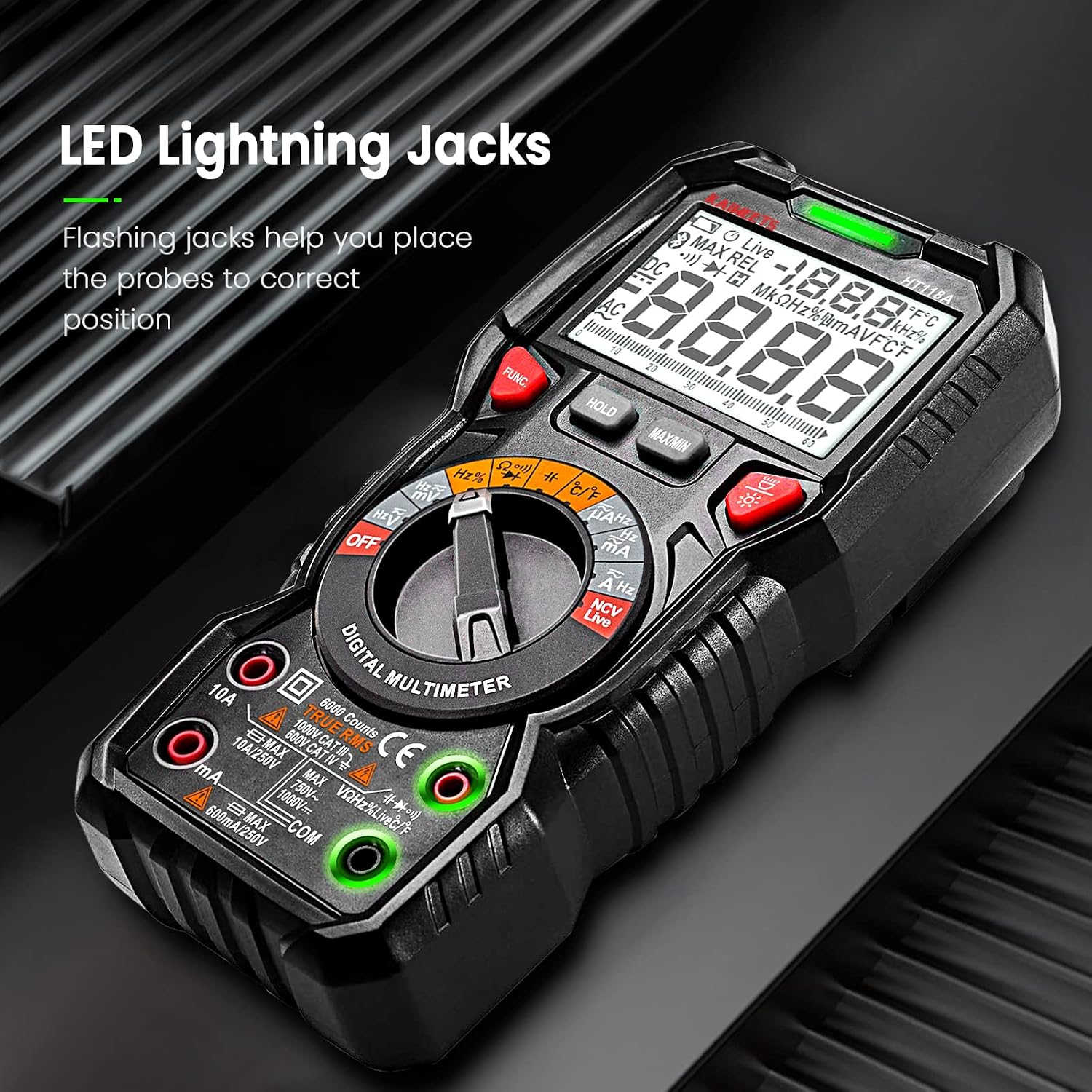
The buying journey that opens this conversation isn’t hypothetical. Reviewers of the KAIWEETS TRMS (True RMS) multimeter have explicitly named ChatGPT as the source of their product recommendation, describing being pointed toward the meter for RV AC troubleshooting and calling it their go-to meter ever since. That’s a legitimate outcome — the KAIWEETS TRMS meter is a functional instrument that serves exactly that kind of diagnostic task. But buried in that success story is the first thing AI recommendations tend to skip: why True RMS matters in that context, and what happens when you use an average-responding meter instead.
A parallel pattern shows up in reviews for basic Klein Tools test kits. Buyers describe discovering their house wiring is miswired after purchasing a basic outlet tester — a real and useful find — but the reviews make it clear that many of these buyers had no prior framework for what to do after the tester flagged a problem. The tool worked. The recommendation landed. The knowledge to act on the finding wasn’t part of the package.
Reviewers of the KAIWEETS KIT01 starter kit repeatedly note they “weren’t expecting much” and were surprised by the quality. That’s a signal worth reading carefully: AI or algorithmic recommendations are setting low expectations that mid-tier products then exceed. That’s fine in a best-case scenario. In an electrical safety scenario, low expectations going in is a warning sign.
The consistent thread: AI tools recommend products reasonably well. They recommend safe usage habits and environment-matched specifications poorly, or not at all.
The CAT Rating Gap: The One Spec AI Recommendations Almost Never Mention
Here’s the specification that appears in almost zero AI-sourced buying recommendations, and it is the most safety-critical number on any electrical test instrument: the CAT rating (short for Category rating, defined under IEC 61010-1 by the International Electrotechnical Commission).
CAT ratings classify how much energy a meter can safely handle when an unexpected voltage spike — called a transient — hits the probes. Transients happen at panels, switchgear, and anywhere utility power enters a building. They can exceed 6,000 volts for a fraction of a millisecond, and an underrated meter can arc, explode, or fail in a way that sends shrapnel and fire toward whoever is holding it.
The four categories, in plain English:
| CAT Level | Where It Applies |
|---|---|
| CAT II | Receptacles, appliances, extension cords — the outlet side of your home |
| CAT III | Distribution panels, branch circuit wiring, fixed equipment |
| CAT IV | Service entrance, utility meters, outdoor conductors |
Per Fluke Corporation’s “Understanding CAT Ratings” white paper, a CAT II meter used at a main panel (a CAT III environment) is operating outside its rated protection. The meter’s input circuitry is not designed to safely absorb the transient energy present at that location.
Across aggregated reviews of budget multimeters recommended by AI tools and general search algorithms — including units marketed toward homeowners and RV owners — no reviewer discusses CAT ratings in the context of why they chose that specific tool. Not one. That’s not a knock on the reviewers; it’s exactly the kind of guidance that doesn’t come through in a chatbot prompt-response cycle. The AI knows the product name. It doesn’t know you’re going to take the probes to your main panel because that’s where the problem seems to be.
The rule is simple: If you’re going anywhere near a residential load center (breaker panel) or commercial distribution panel, your meter needs to be CAT III rated at a minimum, at the voltage level of the circuit. Most reputable mid-range and professional meters — including the Fluke 117 and Fluke 87V — carry CAT III 600V or CAT III 1000V ratings. UL (Underwriters Laboratories) listing and independent third-party CAT rating verification are the marks to look for on the label. Per UL’s product safety certification program overview, the CAT rating stamped on a meter should be verified by an independent certification body — not just claimed by the manufacturer.
True RMS vs. Average-Responding: When the AI Gets the Product Right for the Wrong Reason
The KAIWEETS TRMS recommendation for RV AC troubleshooting is actually a good call — but it’s worth understanding why, because that understanding changes how you use the meter.
True RMS (Root Mean Square) refers to a measurement method that accurately reads the real power content of AC waveforms that aren’t clean sine waves. Most utility power in a house is close enough to a sine wave that average-responding meters (cheaper meters that assume the wave is a perfect sine) read it accurately. But RVs, inverters, motor drives, variable-speed HVAC compressors, and anything powered through a modified sine wave inverter produce waveforms that fool average-responding meters by 10–40%.
Per ECM Web’s “Test Equipment Basics for Electricians,” the practical consequence is that an average-responding meter reads a modified sine wave inverter output low — sometimes significantly low — leading technicians to conclude voltage is within spec when it isn’t, or to misdiagnose a load problem as a supply problem.
The numbers that matter:
- Clean utility sine wave: average-responding meter is accurate within ~1%
- Modified sine wave inverter (common in RVs and off-grid solar): average-responding meter can read 10–40% low
- Variable-speed motor drive output: error can exceed 40%
So when ChatGPT says “get a True RMS meter for your RV” — that’s correct. But knowing why it’s correct is what prevents you from grabbing the cheaper average-responding meter off the shelf and assuming it’ll do the same job.
The Circuit Breaker Finder Situation: Tool Meets Knowledge Gap
One buyer reviewing an 80101 circuit breaker finder kit describes the breaker finder as a “lifesaver” — and then, in the same review, reveals they didn’t know which breaker controlled which outlet before they bought the kit. That’s a valid and common scenario. Breaker finders work by plugging a signal transmitter into an outlet and using a receiver to identify which breaker in the panel responds to that signal.
What the review makes visible is that AI or search recommendations delivered the tool but not the framework. Specifically:
- You still have to open the panel to use the receiver — putting you in proximity to live conductors, even if you’re only reading the receiver wand near the breaker handles and not touching anything.
- Knowing a breaker is mislabeled or unlabeled is different from knowing how to fix it — that step often requires an electrician.
- Verification after labeling — confirming the label is right by testing the outlet with a non-contact voltage tester before trusting the circuit is de-energized is a step that doesn’t come in the box.
None of this makes the circuit breaker finder a bad recommendation. It makes it a recommendation that needs a usage framework attached, and AI tools are not reliably providing that framework as of mid-2026.
Frequently Asked Questions
Can I trust a ChatGPT or AI recommendation when buying electrical test tools?
Partially. AI tools have ingested enough product data to land on reasonable mid-range instruments — the KAIWEETS TRMS meter, Klein starter kits, and similar products that dominate review aggregations are generally functional tools. The gap is in safety specifications. AI recommendations in the electrical tool space consistently omit CAT ratings, input protection tiers, and the distinction between listed (independently certified) and self-certified instruments. Treat an AI product name as a starting point for research, not a finished buying decision.
What is a CAT rating and does an AI recommendation account for it?
A CAT rating (Category rating) classifies how much transient energy — sudden voltage spikes — a meter can safely absorb without failing dangerously. IEC 61010-1, the international standard that defines these ratings, specifies CAT II for outlet-level work, CAT III for panel and branch circuit work, and CAT IV for service entrance and utility-side work. Based on the review patterns analyzed here, AI recommendations do not account for CAT ratings when suggesting electrical test tools. You need to verify the CAT rating of any recommended meter against the environment where you’ll actually be using it.
Is a True RMS multimeter actually necessary for RV or home appliance diagnosis?
For standard household outlet testing — checking whether voltage is present, verifying a receptacle is wired correctly — an average-responding meter works adequately. For RV diagnosis (which often involves inverter-generated power), variable-speed appliance motors, HVAC equipment, or any load on a non-utility power source, a True RMS meter is the correct instrument. The error introduced by average-responding meters on modified sine wave or distorted waveform sources is large enough to produce genuinely wrong diagnoses. If the application involves anything other than clean utility power, True RMS is not a luxury.
What should a homeowner’s first electrical test kit include that AI recommendations might miss?
A complete starter kit for a homeowner doing basic diagnostic work should include: a non-contact voltage tester (NCV tester, a pen-shaped device that detects live voltage without contact), a receptacle outlet tester (a plug-in device with indicator lights showing correct wiring), and a True RMS multimeter rated at minimum CAT III 300V. Per NFPA 70E, which governs electrical safety in work environments, knowing a circuit is de-energized before touching it is a baseline safety requirement — the NCV tester is the tool that provides that confirmation. AI recommendations often suggest only the multimeter and skip the NCV tester entirely.
How do I know if a budget multimeter an AI recommended is safe for working near a live panel?
Check two things: the CAT rating printed on the meter body (not just in the manual — it should be on the instrument itself), and whether it carries an independent certification mark such as UL Listed, CSA, or TÜV. A CAT rating that appears only in marketing copy but is not verified by a third-party certification body is a red flag. Per Fluke’s CAT rating white paper, counterfeit and under-spec’d meters have been documented to bear false CAT ratings without the input protection circuitry to back them up. If a budget meter arrived via a third-party marketplace seller and the only CAT rating is in the listing description rather than stamped on the product, verify the certification independently before using it near live conductors.
The Decision Frame: If X, Then Y
Here’s how to translate an AI tool recommendation into an actual buying decision:
If the AI recommended a meter for outlet-level or appliance testing only → Confirm it’s CAT II rated at minimum. Average-responding is adequate for clean utility circuits; True RMS is better if any inverter or variable-load equipment is involved.
If the work involves a breaker panel at any point → CAT III 600V minimum, independently certified (UL Listed or equivalent). The KAIWEETS TRMS, Fluke 117, and similar mid-range meters with verified CAT III ratings cover this environment.
If you’re diagnosing RV systems, inverter output, or variable-speed motor loads → True RMS is required, not optional. Average-responding meters will give you wrong numbers that look right.
If the AI recommended a kit and didn’t mention a non-contact voltage tester → Add one before you start work. It’s the tool that tells you whether a circuit is actually dead before you treat it as dead.
The AI got you partway there. The safety specs get you the rest of the way.